
Coloring Books for Stress Relief: The Neuroscience-Backed Reset Your Brain Is Craving
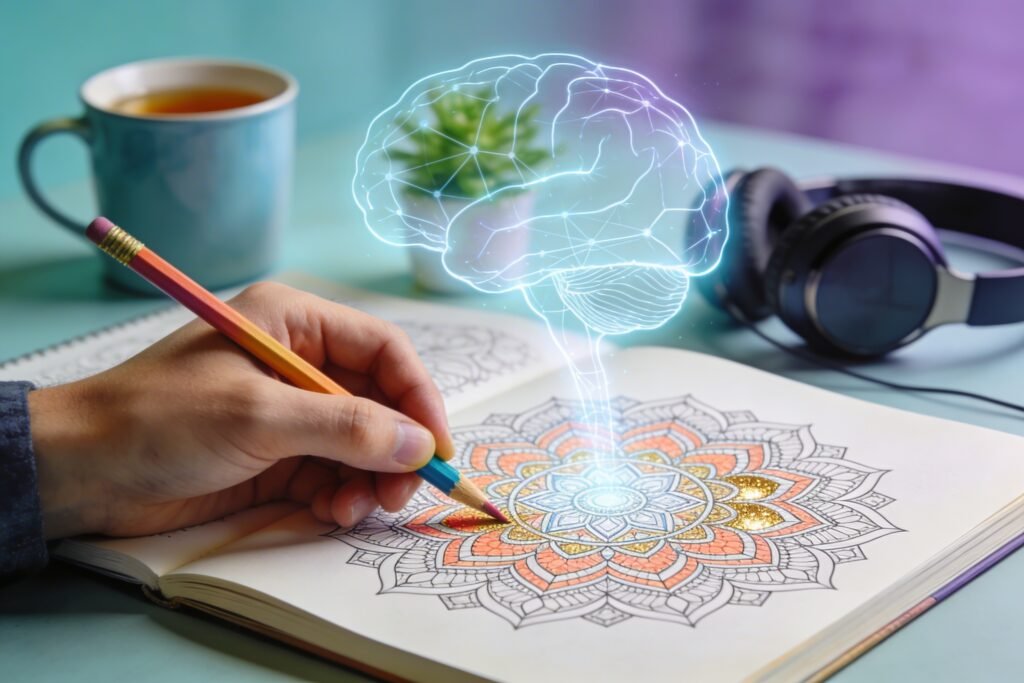
Most people think coloring books are for kids.
They’re wrong.
Coloring is one of the simplest, most neurologically effective ways to calm the brain, lower stress hormones, and reset your nervous system — without meditation apps, complicated routines, or expensive therapy sessions.
And the reason has nothing to do with nostalgia.
It has everything to do with how your brain is wired.
Why Your Brain Is Overloaded (And Doesn’t Know How to Stop)
Modern stress isn’t loud.
It’s constant.
Notifications. Decisions. Micro-pressures. Background anxiety.
Your amygdala — the brain’s threat detection center — doesn’t distinguish between a real danger and an overflowing inbox. It simply fires.
Cortisol rises.
Heart rate increases.
Attention fragments.
The result? A nervous system stuck in low-grade fight-or-flight.
The real problem isn’t stress.
It’s that most people never fully exit it.
The Hidden Science Behind Coloring Books and Stress Reduction
Coloring works because it activates the prefrontal cortex — the part of the brain responsible for focus, planning, and controlled attention.
When you focus on staying inside lines, selecting colors, and filling shapes, something powerful happens:
- The prefrontal cortex becomes engaged.
- The amygdala activity decreases.
- The parasympathetic nervous system turns on.
This is the same branch of your nervous system responsible for slowing heart rate and reducing cortisol.
In simple terms: coloring shifts your brain from alert mode to recovery mode.
Not symbolically.
Biologically.
Why Coloring Feels Different Than Scrolling
Scrolling feels relaxing.
But it isn’t restorative.
Social media stimulates dopamine spikes through novelty and unpredictability. Your brain remains alert, scanning for the next hit of information.
Coloring is different.
It creates structured focus.
The patterns are predictable. The movement is repetitive. The decision-making is limited.
That predictability signals safety to the nervous system.
And safety is what shuts down stress.
Coloring as Active Mindfulness (Without the Frustration)
Many people struggle with meditation.
The mind wanders. Thoughts intrude. Silence feels uncomfortable.
Coloring bypasses that resistance.
It anchors attention visually and physically. The hand moves. The eyes track color. The brain narrows its focus naturally.
Instead of forcing stillness, coloring creates guided attention.
That’s why even five to ten minutes can measurably reduce anxiety.
You’re not “trying” to relax.
Your nervous system simply does.
The Cortisol Effect: Why This Matters Long-Term
Chronic cortisol elevation affects:
- Sleep quality
- Memory retention
- Emotional regulation
- Immune function
Coloring acts as a micro-intervention.
A short reset that interrupts prolonged stress cycles.
Repeated consistently, this strengthens neural pathways associated with calm focus. The brain becomes more efficient at exiting stress states.
In other words, coloring doesn’t just calm you in the moment.
It trains your brain to recover faster in the future.
The Identity Shift Most People Miss
Coloring isn’t childish.
It’s cognitive regulation.
That distinction matters.
Many adults avoid creative “play” because it feels unproductive. But productivity without recovery leads to burnout.
High performers don’t just work hard.
They manage their nervous systems.
Coloring books can become a daily ritual — not as entertainment, but as mental hygiene.
Five to twenty minutes.
No notifications.
No pressure.
No outcome to optimize.
Just structured focus and physiological recovery.
How to Use Coloring for Maximum Stress Relief
If you want real results, approach it strategically:
1. Choose Structured Designs
Mandalas and repeating geometric patterns increase focus and promote rhythmic attention.
2. Set a Time Boundary
Start with 10 minutes. Treat it like a scheduled reset.
3. Eliminate Distractions
No TV. No multitasking. This is about nervous system recalibration.
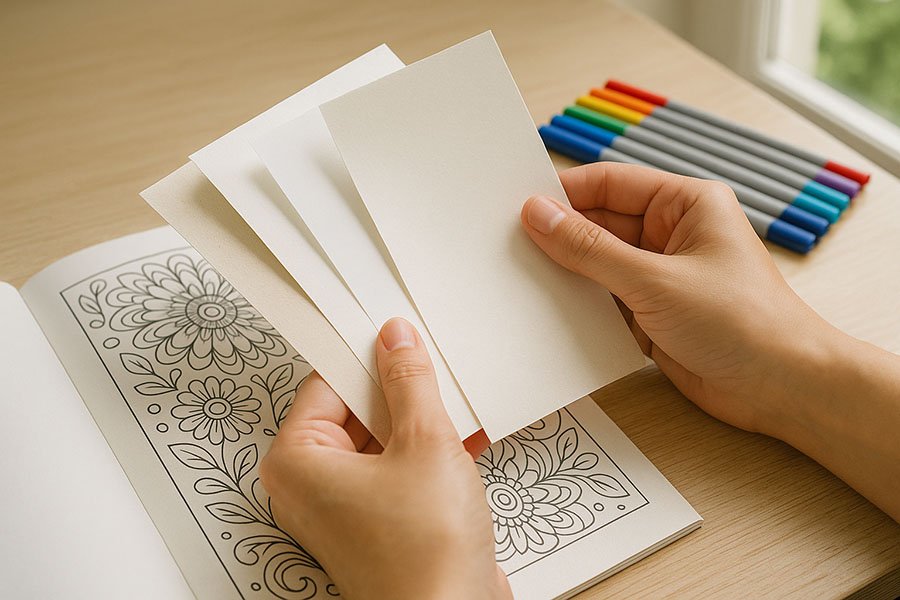
4. Use Physical Tools
Colored pencils or markers enhance tactile engagement, strengthening sensory focus.
5. Make It Consistent
Neural rewiring happens through repetition.
Consistency beats intensity.
Who Benefits Most From Coloring Books?
Coloring is especially powerful for:
- Professionals with high cognitive load
- Students under sustained academic pressure
- Individuals experiencing chronic anxiety
- Creative workers facing burnout
- Anyone who struggles with traditional meditation
If your brain feels “on” all the time, this is for you.
The Bigger Picture: Stress Isn’t a Badge of Honor
There’s a cultural belief that being busy equals being important.
But constant activation damages clarity, creativity, and long-term performance.
Coloring books offer something rare:
A structured, accessible, scientifically grounded reset.
No training required.
No skill required.
No performance required.
Just a pen, a page, and a nervous system ready to calm down.
The Bottom Line
Coloring books are not a trend.
They are a neurological tool.
A low-cost, low-effort intervention that shifts your brain from survival mode to recovery mode.
And in a world that constantly activates your stress response, the ability to intentionally deactivate it is a competitive advantage.
If stress has become your baseline, consider this your permission to rewire it.
Start with ten minutes today.
Then make it a ritual.

0 Comments